

Technological determinism and how AI will kill the email

“I didn’t have time to write a short letter, so I wrote a long one instead.” — Mark Twain
I’ve been thinking a lot about the impact of AI on communication. There’s this concept called technological determinism. It’s the idea that technology shapes how we, as individuals, in a society think, feel, act, and thus how society operates.
The Gutenberg press supercharged the Renaissance by making the mass production of books and pamphlets, easier, cheaper, faster. Consequently, knowledge and ideas became more accessible and spread faster. Mobile phones are always on us and allow us to communicate from almost any location but they have fuelled a world where we are expected to be always on, wherever we are.
Progress can be a double-edged sword.
Technological determinism is the “idea that technology develops as the sole result of an internal dynamic and then, unmediated by any other influence, moulds society to fit its patterns” (Winner, 1986 p.19).
One of innovation’s truly questionable gifts is the email. If we consider the form through the lens of technological determinism, it gives us plenty of reason to pause. Emails shape work. The etiquette around expected responsiveness has resulted in a large part of the workforce being judged on replies, not on how they drive forward an actual agenda or targets. So out of control is this medium that people have to be reminded that ‘they don’t have to reply at 2am just because their boss has messaged them.’ How odd it has become a point of debate whether people should be entitled to sleep.
It’s a broken system and ripe for disruption. So, it’s a damn good thing that start-ups are zeroing in to solve it with AI. The efficiencies for both individuals and enterprises alike make it a great B2B opportunity. I’m sure many of you have heard about or tested Fyxer, the AI agent for emails. I’ve used the product and I was impressed. One, it works and two, in several cases, it made me sound a lot nicer and significantly more likeable. I mean, that’s not always the tone I’m going for but appreciated effort nonetheless. And I’m not the only one who thinks this: they’ve seen amazing growth, from $1m to $17m+ ARR in under nine months1. A testimony to both how good they are and what an absolute fucking pain emails are.
But, looking through my telescope, I think that even this rapid growth is just the tip of the iceberg. Given how emails have shaped work and communication (and non-work sadly), I believe that people massively underestimate the change that AI will wreak on our behaviours.
We will stop reading emails.
Not for a while, but that’s where we’ll end up. Initially, very little will change because not everyone will be using an AI tool and so it is simply time-saving for those that do. But, soon, all email services will offer the AI helper. They will quickly, and I promise this will happen WAY faster than you imagine, become so effective that we will step back from the day to day of managing our inboxes.
I imagine we’ll initially use a dashboard of live decisions / information / calendar invites. After a while, we will probably switch to managing via short, 15 minute calls with the AI - which, by this point, will look more like a personal assistant.2 After that, it’s anyone’s guess. The AI might be so good that it doesn’t even need our input half the time - that’s a scary thought.
It’s hard to imagine work without emails; they are such an ingrained part of our culture, even with Slack, Teams and the rest of the messaging tools. A few thoughts on where this might leave us…
⬇️ The subtleties of social status are no more
A lot of email is about social signalling. It shouldn’t be - but we are but human so it is. A friend in fashion said that a) everyone signs off with a ‘x’ kiss (!!!) and b) the number of kisses from the boss on email was a genuine barometer for how annoyed she was with you. For many reasons, this blew my mind.
Even for those not in fashion, how start a message, how you sign off, these are all power indicators. As a rule of thumb, the more senior you get - or important you think you are - the shorter and more abrupt emails become. You’re too important or busy to bother with these things because time is money, don’t you know.
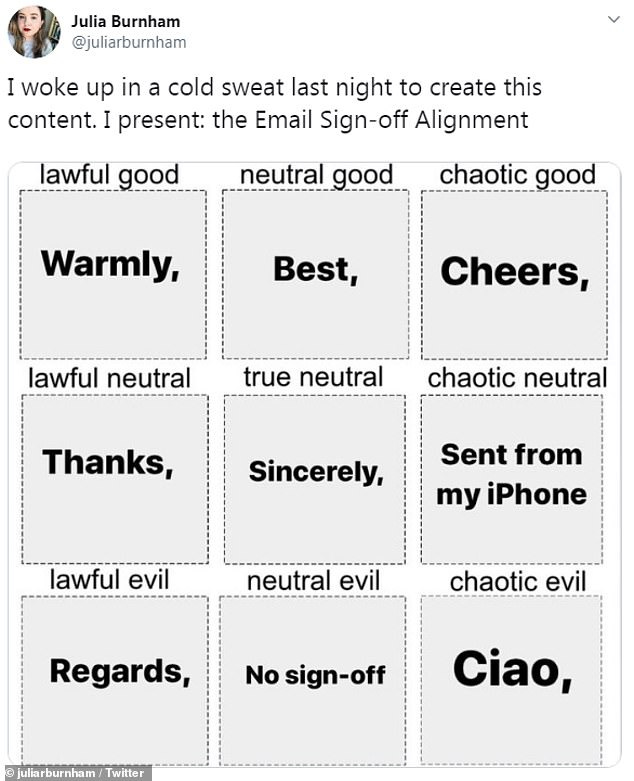
Short term, post AI adoption, we’ll see very little behaviour change, because people are still reading their emails, so these things still have weight. And because I know that people will specifically ensure their AI is mimicking them correctly, because -horrors! - imagine it if it makes you sound all gushy and junior.3
But as people read less and less of their emails, all such indicators and salutations will be… just dropped. After a while, most messages will be two different AI systems back-and-forthing with information and requests. And what’s the point in salutations between technology? None at all.
⬇️ Email marketing is hard when no one reads emails
If I’m not reading my emails then I’m certainly not reading messages about a sale from a brand I bought a single item off, five years ago.4
Genuinely, this is going to be a big hit for many brands. Email is a big marketing channel and, while the information will likely be absorbed and passed on by the AI reader, catchy titles and cunning offers may well amount to nothing after it’s summarised up in a briefing. Brands will need to adapt and evolve email comms to get through to the end purchaser. Of course, this will also coincide with a broader shift towards agentic shopping and so I suspect we’ll see a complete marketing revolution (under duress or not) as brands scramble for new ways to cut through the noise - and AI gatekeepers.
⬆️ In-person meetings are king
One of the repercussions of these efficiencies is that we are adding in a layer between us and those we’re in contact with. Well, if you think that it’ll probably be filtered through an AI by the sender and receiver, then it’s two layers.
The use of AI is removing intimacy and so intimacy becomes even more prized. In person meetings - private, personal, and with time and space to make a human connection will be ever more valued. That’s a great thing. People are meant to interact and 9/10 times are far nicer, more cooperative, and more reasonable in person.
⬆️ We will all make more phone (not video) calls
Phone calls! Beloved of Boomers and anxiety inducing for Gen Z and below.
As emails adapt with AI, I think phone calls will increase as well. Also, by this I actually mean phone calls - not video calls, as the nature of these will be more ad hoc and efficient:
You’re making a remote introduction: Echoing the point above, it’ll become a mechanism for when you’re introduced to people remotely and start working together. You need to form a human connection stil;.
You will be forced to. Fortunately, your AI system won’t be able to solve everything (otherwise what’s the point of you?). On these rare but reassuring occasions, you and your corresponder’s AI agents will up quick little phone call between you and the other principal to thrash it out. No getting out of it.
You are circumnavigating the AI: Urg, so this will actually be quite annoying as people realise that their messages are being (probably entirely appropriately) de-prioritised by your email AI in the briefing and so are not hearing back. So, they’ll ambush you by phone instead. Hmmm.
It’s actually urgent: Fair.
It’s private: I presume that these changes will coincide with the AI notetakers and email are all one and the same, so your AI PA is 100% aware of what you’re up to and what needs addressing. If you’re smart, you’ll keep your mobile calls a tiny bit separate, just in case the AI doesn’t need to know….
Prioritisation and managing will be hard
We’ve created a culture where emails have become the to-do list. It’s not super productive but it is the way it is… until it won’t be.
As this technology advances and our behaviours change, we will be forced to be proactive rather than responsive. This is good but it will be really hard for a lot of people. Leaders, department heads, managers, will all need to up their game and constantly push the focus on what is driving the business and how the team should prioritise around that.
While the shift in format of the new ‘email’ will be more efficient - be it a dashboard or via short calls - it’ll also be extremely tiring. We may leave behind inbox anxiety but the sharp bursts of high octane decisions will be tough initially. Over time, we will work out how to manage this, ‘light’ decisions to warm up and the AI doing the hard work on stuff it can: which coffee shop to meet at, the best time for a meeting etc. But there is no getting around the effort it’ll take to adapt.
Change is hard but I, for one, think this is an amazingly exciting time. Emails suck - we all know that - and AI presents a path, longer term, to lead us away from their tyranny.
Vive la révolution.
This is very fitting as Fyxer actually was company that managed off-shore personal assistants for abut eight years before it saw the opportunity with AI.
@Fyxer, please release the data on people deliberately making their AI less polite.
Too many companies dodge the unsubscribe buttons and it’s not ok.